Dubrovnik is easy to recognize from its walls. My photographs from this trip tell a wider story: a dinner above Lapad Bay, a Franciscan monastery beside the Ombla, and a view beneath the surface at Koločep. Then back to the city, where the fortresses give way to narrow passages and everyday doorways. All within a few July days, each with a different sense of the coast.
July 17 / A table above Lapad Bay
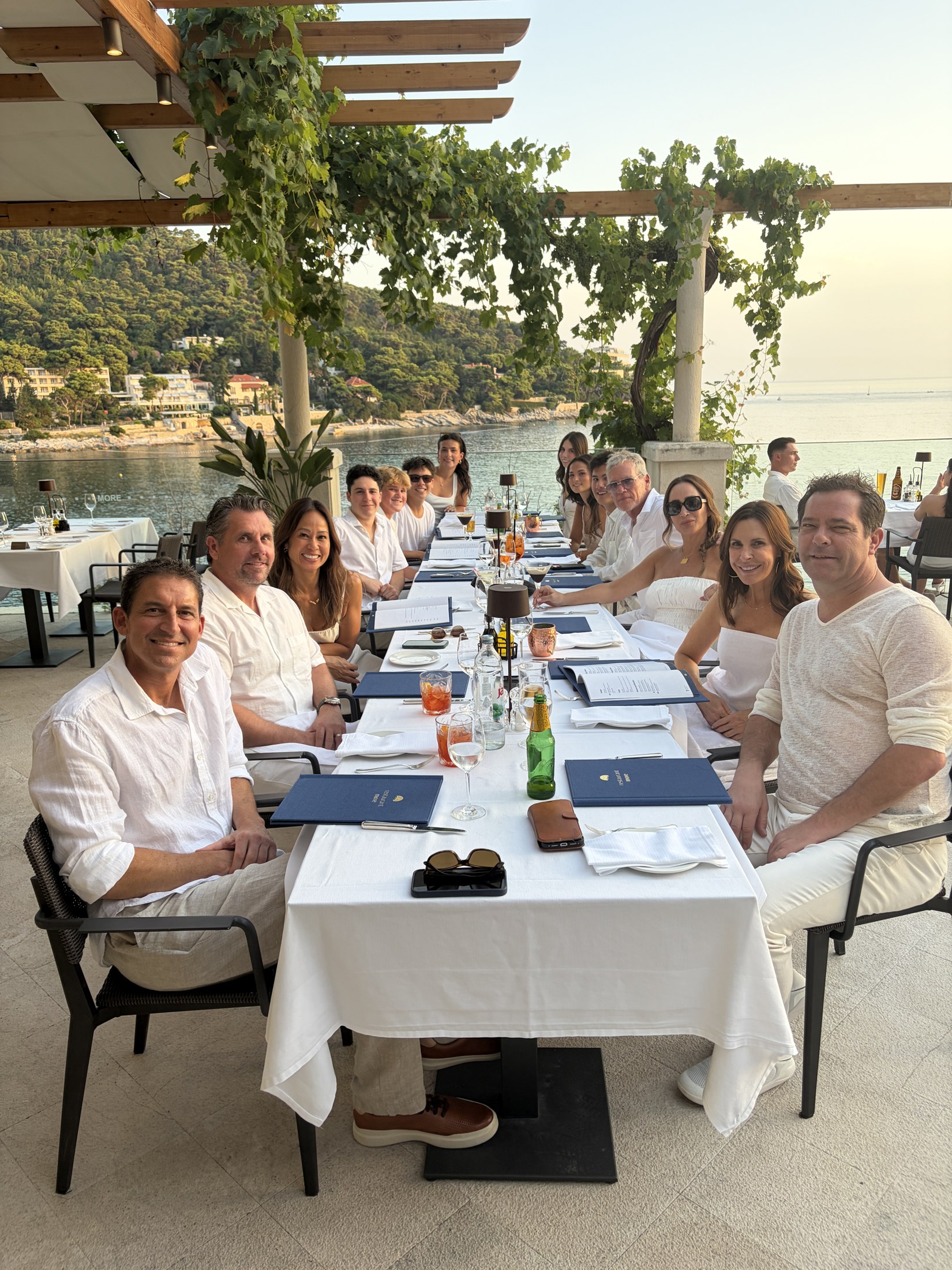
Our dinner at Restaurant More puts the people at the center of the trip. The long table reaches toward the water, everyone in white, with blue menus and the last warm light across the terrace. Beyond the glasses and place settings, Lapad Bay opens out toward the Adriatic.
More’s terrace sits on Dubrovnik’s Lapad peninsula, away from the enclosed streets of the Old Town. That geography changes the whole picture: an open horizon, a wooded shoreline across the bay, and room for everyone around one table. The photograph captures the gathering before the meal has really taken over. It is a good place to begin this story.
July 19 / Rožat, along the Ombla
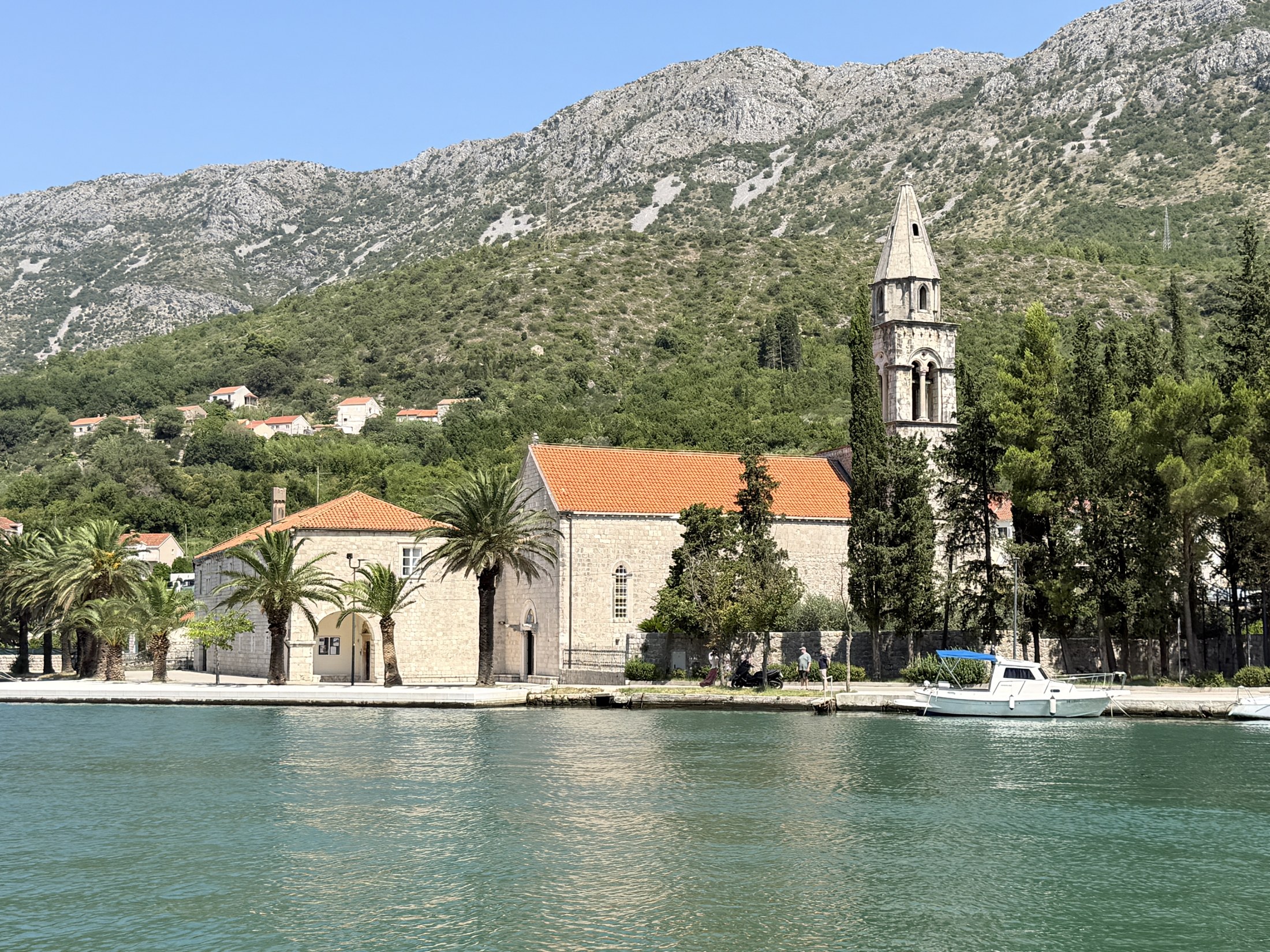
The church beside the water is the Franciscan Monastery of the Visitation of Mary in Rožat, in the Rijeka Dubrovačka area along the Ombla. The baylike stretch of water and the steep hillside give it a very different setting from Dubrovnik’s seaward walls. Here, the church stands almost level with the quay, with small boats tied up just outside.
Its quiet appearance hides a history of rebuilding. The Franciscan community’s own account traces the monastery to 1393, when it was established to care for recovering friars. A later complex took shape in the 1580s. The earthquake of 1667 destroyed the church and part of the cloister; the church was rebuilt in 1702–1704.
That history gives the photograph more weight. The red roof, bell tower, and waterfront belong to a place that has been repaired and returned to use over centuries. Seen from across the water, it is a small part of the landscape. Its story is considerably larger.
July 19 / The blue beneath Koločep
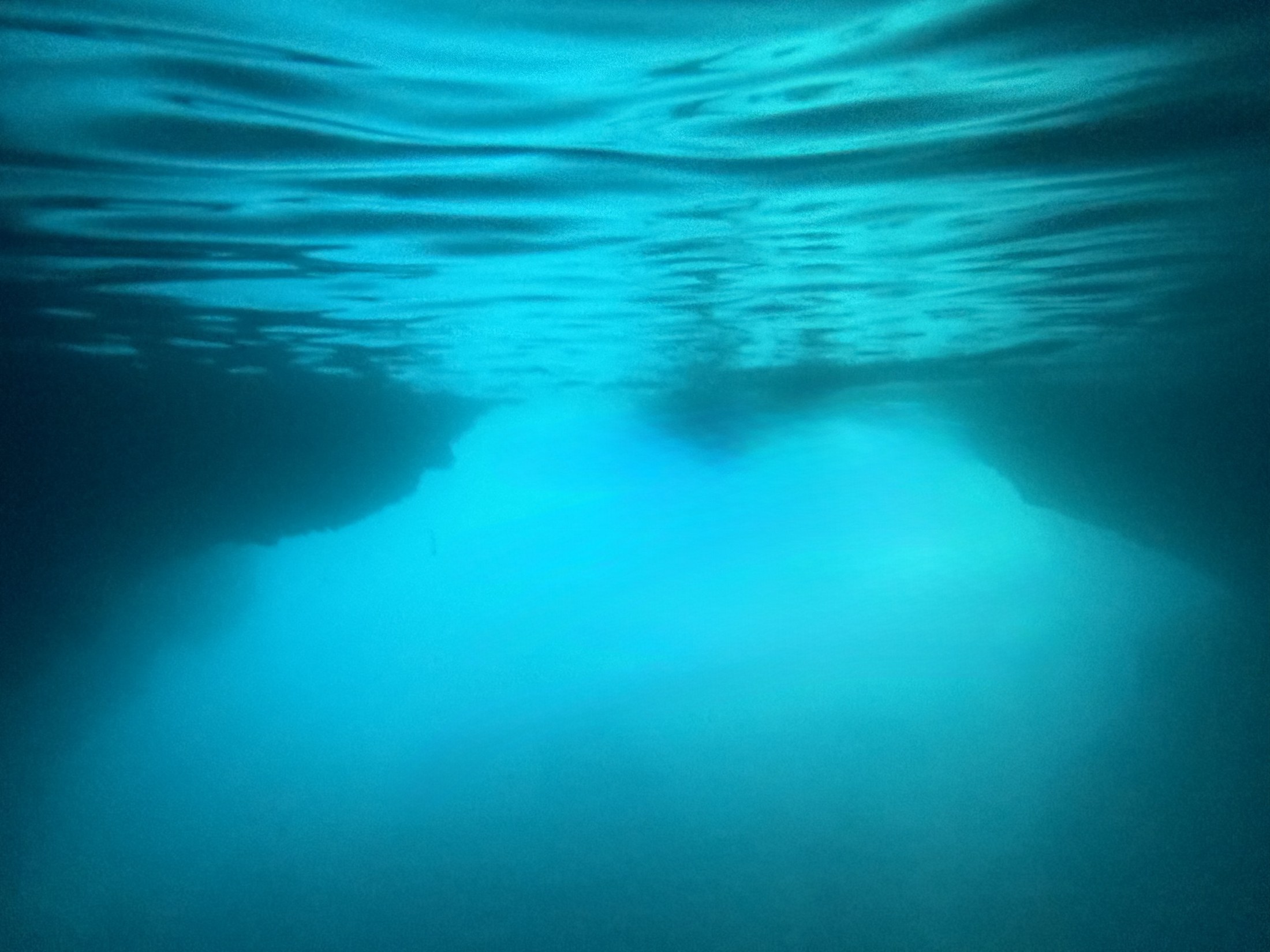
The underwater photograph belongs to another side of the Dubrovnik coast. Its recorded location closely matches the Blue Cave, or Plava špilja, on the southern side of Koločep, one of the Elaphiti Islands. The image looks outward beneath the surface: dark rock on either side, ripples overhead, and a bright opening ahead.
The cave’s blue light comes from sunlight passing through the water into the rocky chamber. In this photograph, almost everything else disappears. There is no skyline or building to establish scale—just the shape of the opening and the color filling it. After Rožat’s centuries of architecture, this is the coast reduced to water, rock, and light.
July 20 / Between Dubrovnik’s fortresses
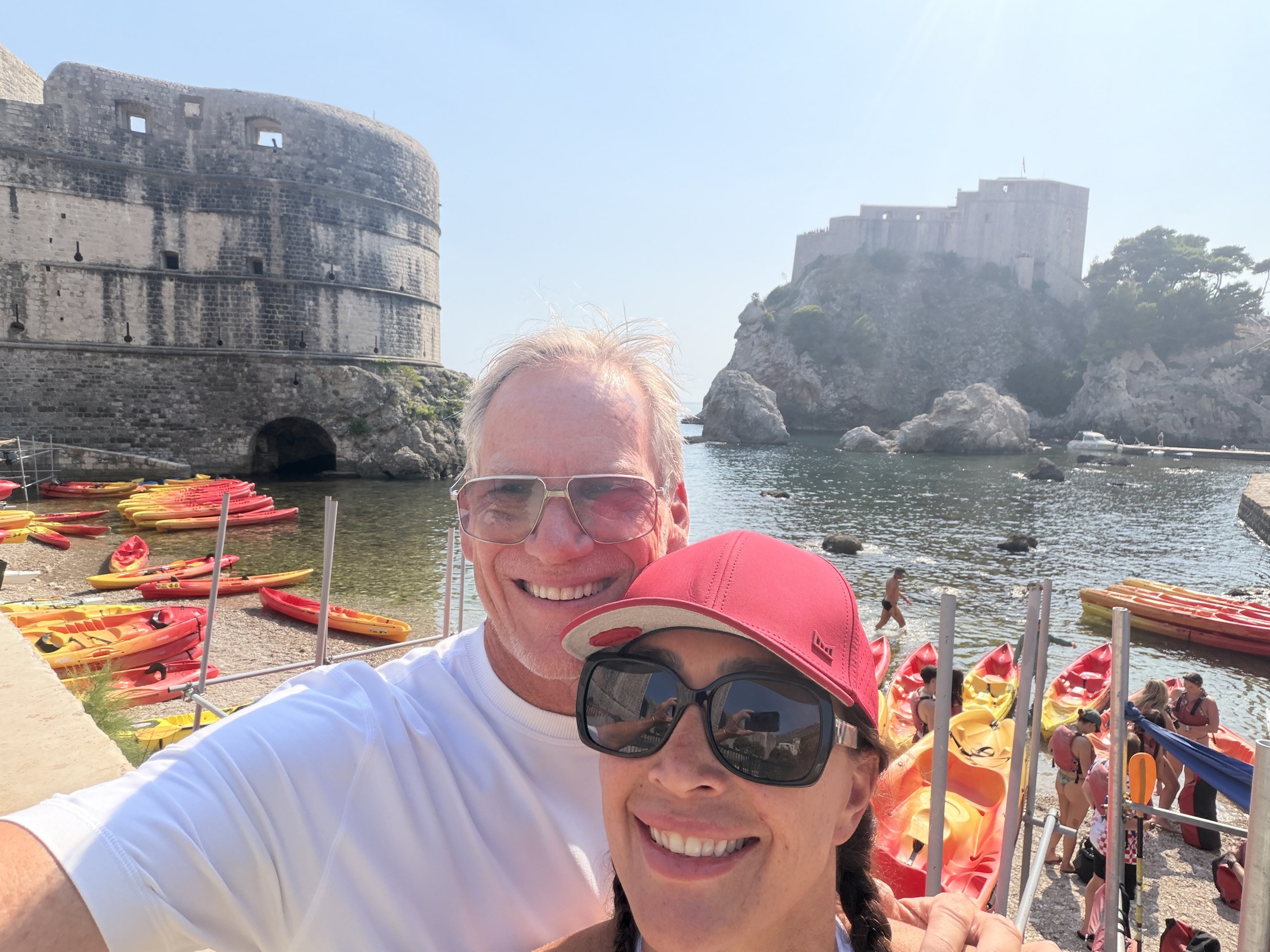
At Pile Bay, the view becomes unmistakably Dubrovnik. Behind us, the rounded mass of Bokar anchors one side of the cove, while Lovrijenac rises on its rock across the water. Bright kayaks crowd the shoreline beneath defenses built for a very different kind of arrival from the sea.
Lovrijenac stands on a 37-meter cliff. Together with Bokar, it protected the city’s western harbor. Seeing the two in the same frame makes their purpose easy to understand: the water between them was an approach to defend. In our photograph, that same space is full of summer color, with the fortresses towering over a simple harbor selfie.
July 20 / Beyond the big views
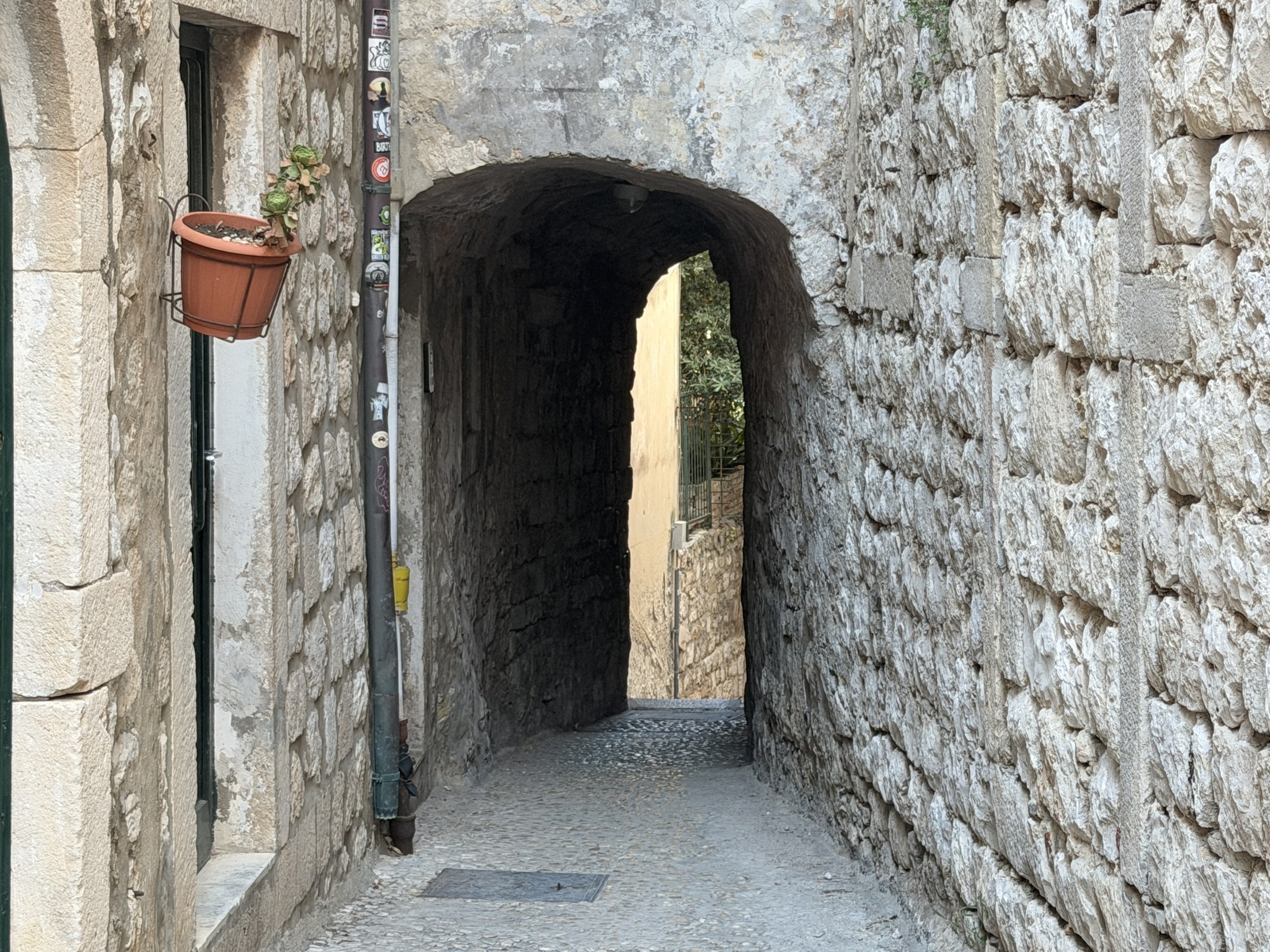
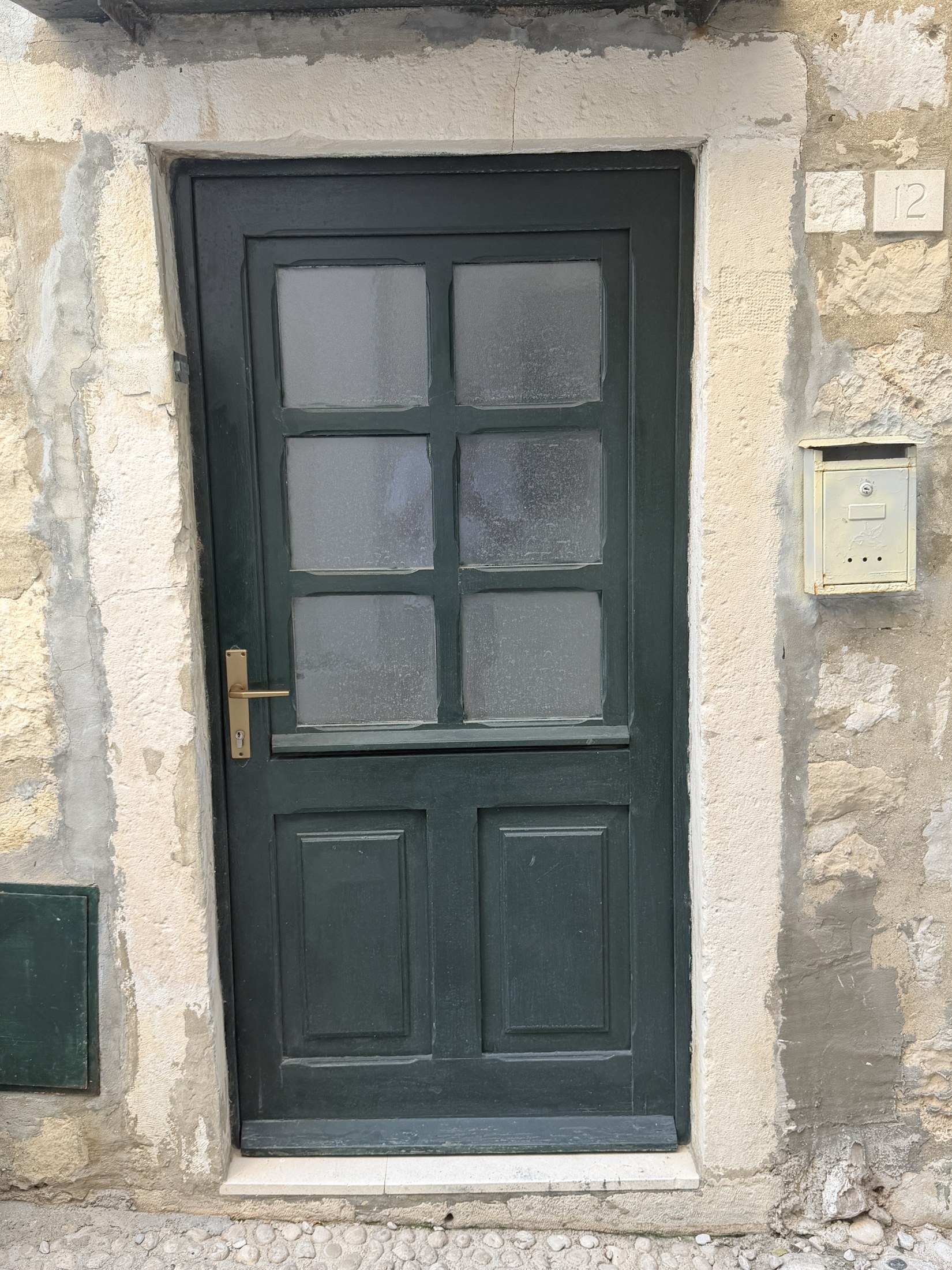
Later that afternoon, the photographs move in closer. A passage slips beneath a stone arch. A green door sits inside a worn frame, with a brass handle and an intercom beside it. The scale changes from a city defending itself to the threshold of a home.
These are the details that make the larger views feel connected to a real place. Dubrovnik has its monumental walls, but it also has doors people open every day. Rožat has a centuries-old monastery and boats along the quay. Lapad has a beautiful bay and a table with everyone gathered around it. That is the Croatia I want these photographs to hold: the history in the background, and the life happening right in front of it.